
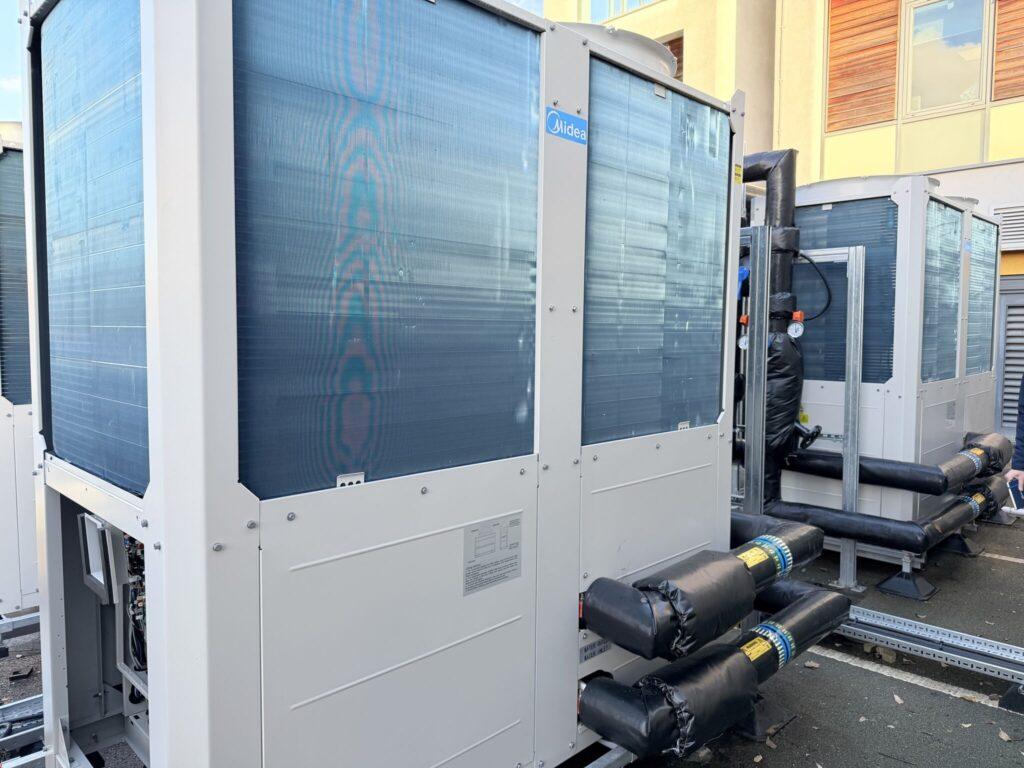
 School Decarbonisation in Reading with Air Source Heat Pump Installation
 What Are My Funding Options Post-PSDS?
Schools across the United Kingdom are under increasing pressure to reduce their carbon emissions and improve energy efficiency. The government has set ambitious targets, including achieving net zero carbon emissions by 2050, and education estates play a significant role in meeting these goals.
However, while the intent to decarbonise is strong, many schools face considerable barriers that prevent meaningful progress. Understanding these obstacles is the first step towards overcoming them and creating more sustainable, cost-efficient learning environments for your pupils and staff.
Our guide explores the main challenges schools encounter when attempting to decarbonise, and offers practical insights into how you can navigate them successfully.
What does decarbonisation in schools mean?
Decarbonisation refers to the process of reducing carbon dioxide emissions associated with your school’s operations. This typically involves improving energy efficiency, transitioning to renewable energy sources and upgrading building infrastructure to minimise environmental impact.
For educational institutions, decarbonisation can lead to significant cost savings through reduced energy bills, while also contributing to climate goals and setting a positive example for students about environmental responsibility.
The main barriers to school decarbonisation
Limited capital funding
One of the most significant obstacles schools face is the lack of available capital to fund decarbonisation projects. Upgrading heating systems, installing solar panels or improving insulation can require substantial upfront investment that many schools simply cannot afford from their annual budgets.
Government funding schemes, such as the Condition Improvement Fund (CIF) and School Condition Allocation (SCA), can help, but competition for these funds is fierce and application processes can be complex and time-consuming.
Ageing building stock
Many school buildings were constructed decades ago using materials and methods that prioritised cost over energy efficiency. Older estates often feature single-glazed windows, poor insulation and outdated heating systems that are expensive to run and difficult to upgrade.
Retrofitting these buildings presents technical challenges, particularly when dealing with listed buildings or structures with specific architectural features that must be preserved. The complexity of these projects can discourage schools from pursuing them altogether.
Complex energy procurement
Energy procurement for education can be challenging, particularly for schools that lack dedicated facilities management expertise. Understanding energy tariffs, negotiating contracts and identifying opportunities for renewable energy adoption requires specialist knowledge that many school leaders do not possess.
Competing priorities
School leaders must balance numerous demands on their time and resources. Immediate concerns like staffing, student welfare and academic performance often take precedence over longer-term sustainability projects, even when those projects could deliver substantial cost savings.
Decarbonisation initiatives can feel overwhelming when added to an already full agenda, particularly if the benefits seem distant or uncertain compared to more pressing operational needs.
How can schools overcome decarbonisation barriers?
Despite these challenges, there are practical steps schools can take to progress their sustainability goals:
- Start with energy audits – Commission professional energy efficiency surveys to identify priority areas and quantify potential savings
- Develop phased plans – Break large projects into manageable phases that can be funded and delivered incrementally
- Access specialist support – Work with education property experts who understand funding routes and technical requirements
- Explore alternative funding – Investigate options beyond government grants, including green loans and energy performance contracts
- Engage stakeholders – Build support among staff, governors and parents by communicating the financial and educational benefits of sustainability initiatives
How can Eddisons Education help with school decarbonisation?
We understand the obstacles that prevent school decarbonisation and have extensive experience supporting educational institutions through the process. Our teams can conduct comprehensive building surveys to assess your current performance, identify improvement opportunities and develop realistic implementation plans.
We can also assist with funding applications, project management and ongoing estate management to ensure your sustainability initiatives deliver lasting benefits.
Decarbonise your school with the help of our experts
If you are ready to overcome the barriers holding back your school’s decarbonisation journey, please call 0808 253 1301 or complete the form below to arrange a free consultation with our experts.