
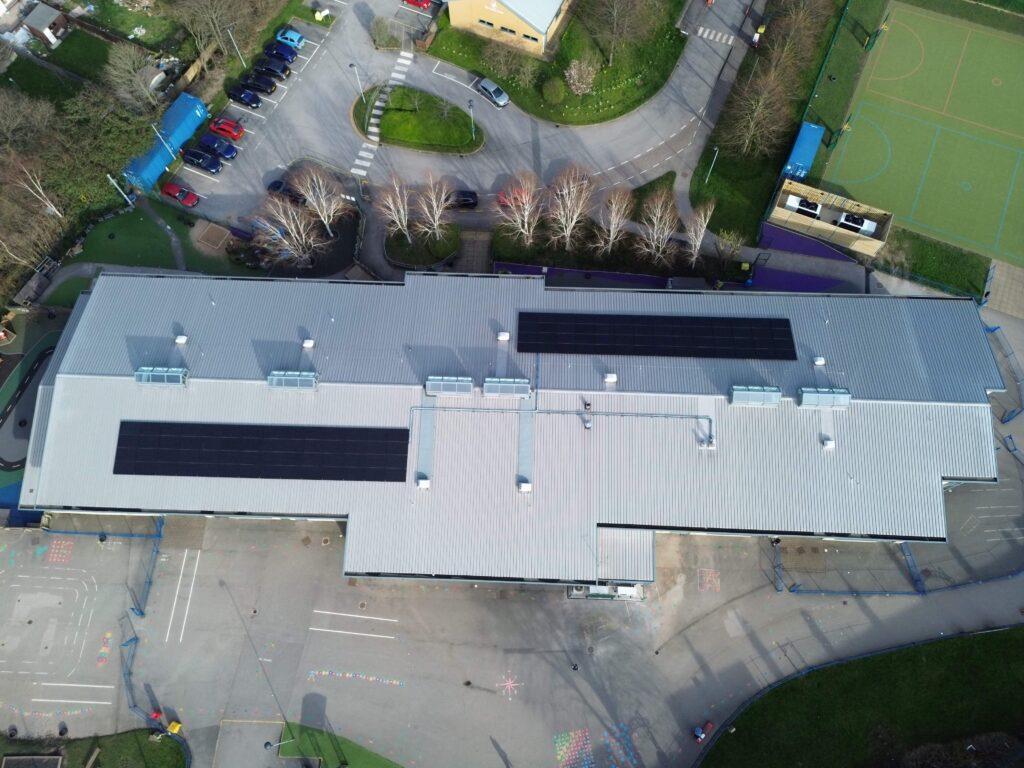
 Full Decarbonisation Programme at Thornbury Primary Leadership Academy
 The current outlook for education estates
Every eligible further education college in England will receive a share of the £307 million Further Education College Condition Allocation (FECCA) for 2026 to 2027. Individual allocations will range from around £6,000 for smaller institutions to £7 million for large college groups, with the DfE confirming each college’s figure in the summer.
This is the second year of the FECCA, and the fund has grown. The 2026 to 2027 allocation is £5 million higher than last year, when the scheme was introduced in response to colleges calling for a reliable annual fund to plan and maintain their estates. It forms part of a wider £1.7 billion government investment to modernise college buildings by 2030.
With the spend deadline set at 31 March 2029, the time to begin planning is now.
What is the funding for?
Your allocation is capital funding. It exists to maintain, improve and ensure the suitability of your college estate, with condition improvement taking clear priority over suitability projects. The DfE has been explicit that suitability work should not be pursued at the expense of addressing condition backlogs, and reserves the right to take previous spend decisions into account when assessing future funding needs.
In practical terms, eligible spend includes:
- Structural and fabric repairs to buildings and grounds.
- Heating, ventilation, and mechanical systems.
- Roofing, windows, and external envelope works.
- IT infrastructure in poor condition – specifically passive cabling, data outlets and network switching (IT equipment, software and servers are explicitly excluded).
- Energy efficiency improvements that address condition and reduce energy demand
Funding cannot be used for land purchase, building expansion, revenue expenditure, recoverable VAT, or consultancy and marketing costs. Your grant agreement letter sets out the full terms and conditions, which must be signed before your allocation can be received.
How was the allocation calculated?
Each college’s individual allocation is calculated using a formula based on expected floor space, modelled from learning hours delivered in 2024 to 2025. Provision requiring more specialist space, such as engineering, construction, and hospitality, is weighted more heavily than classroom-based delivery.
Allocations are also adjusted by regional location factors produced by the Building Cost Information Service, reflecting the real difference in construction costs across the country. Colleges in Inner London carry a factor of 1.21, while those in the North East and Yorkshire carry a factor of 0.89.
What does the DfE expect from you?
Spend must align with your college’s asset management plan and estate strategy. Your board of governors is responsible for signing off both documents, and the DfE expects your allocation to be directed at the condition priorities identified within them.
Energy efficiency and sustainability are also highlighted within the spend guidance. Condition improvement projects that simultaneously reduce energy demand, such as insulation upgrades, heating system replacements, or building fabric improvements, represent sound use of the allocation. They address condition need while cutting running costs and carbon emissions.
The DfE reserves the right to claw back any funding not spent by 31 March 2029, or any funding used outside the terms of your grant agreement. Planning and delivery should begin as soon as your individual allocation is confirmed.
A note for sixth-form colleges
This allocation does not apply to sixth-form colleges, which receive separate condition funding through Devolved Formula Capital. Please refer to the DfE’s school capital funding guidance for details.
How we can help
With your allocation confirmed and the spend window open, the priority now is deciding where your funding will have the greatest impact. That is not always straightforward, particularly where condition backlogs have built up across multiple buildings, or where competing priorities make it difficult to know where to start.
Our team of RICS-certified surveyors can help you prioritise where your allocation is best spent, ensuring your programme targets the most urgent condition needs first and meets DfE eligibility requirements in full.
We are also available to attend individual college meetings to discuss your allocation, offer expert insight on condition priorities, and help you build a programme you can deliver with confidence within the spend window.
To arrange a consultation, please complete the contact form below or call 0808 253 9531.