 The current outlook for education estates
 DfE allocates £184m to expand post-16 capacity in 19 devolved areas
The application window for Round 3 of the Welsh Government’s Digarbon scheme closes on 25 June 2026, with £10.2 million of capital funding available to further and higher education institutions in Wales for projects that reduce direct carbon emissions from their estates.
The fund, administered by Salix Finance, has been open since 2 April. Funding decisions are expected by October 2026, with project delivery required by 31 March 2030. Only one application can be sent per institution, which makes the scoping work in the weeks before submission essential for a chance at success.
What the Digarbon scheme covers
Round 3 of the scheme is structured as an unsecured loan at a fixed interest rate of 2.45%, aligned with the government borrowing rate.
Capital and interest must be repaid in full by 31 October 2050. The loan value is linked to the carbon savings of the project, so the stronger the carbon case, the more an institution can draw down.
Funding is paid as a single upfront payment during the 2026/27 financial year. Interest payments begin from drawdown; capital repayments begin after project completion. Applicants must submit an amortisation schedule as part of the application to demonstrate affordability.
The scheme covers capital costs from design through to installation and commissioning, including procurement, materials, construction, and project management.
Eligible projects
Eligible projects must relate to existing non-domestic buildings in Wales that are owned or held on a long lease with at least ten years remaining. Projects must be proven to be completely reliant on the loan and cannot duplicate work already underway or legally required.
The scheme is primarily aimed at low-carbon heating, and each application must outline direct carbon-saving measures, but a broad set of complementary measures sits well alongside:
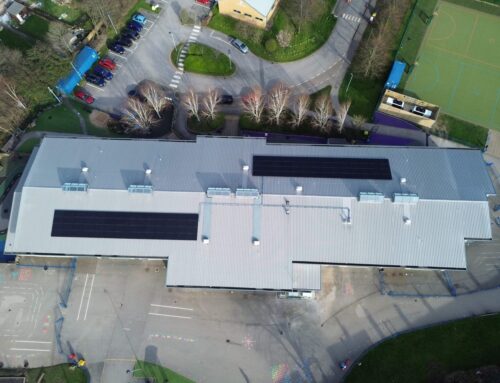
- Solar PV.
- Cavity wall and loft insulation.
- LED lighting.
- Electric vehicle infrastructure.
- Wider building fabric and energy efficiency upgrades.
These are measures that make economic sense on their own terms and, at 2.45%, the financing is materially cheaper than most commercial alternatives.
How the Digarbon funding is allocated
A soft cap of £2.5 million per application is in place to spread funding across the sector. Around 75% of the total is earmarked for higher education and 25% for further education, though the split is flexible depending on demand. There is no strict minimum, but projects below roughly £50,000 are discouraged unless there is a clear justification.
Institutions must obtain more than 80% of their income from educational activities to qualify.
What to consider before 25 June
With the deadline now under two months away, institutions still weighing up a submission have a relatively short runway to confirm project scope, model carbon savings, and sign off on the repayment plan. Strong applications tend to bundle a primary low-carbon heating measure with the complementary fabric and renewables work that improves the overall carbon case (and, by extension, the size of the loan that can be supported).
The next round is not yet confirmed. For institutions with capital projects already in the pipeline, Round 3 is the immediate opportunity.
If you would like to discuss the Digarbon scheme or any of the other funding schemes across the country, complete the form below and a member of BTG Eddisons’ sustainability team will be in touch.