
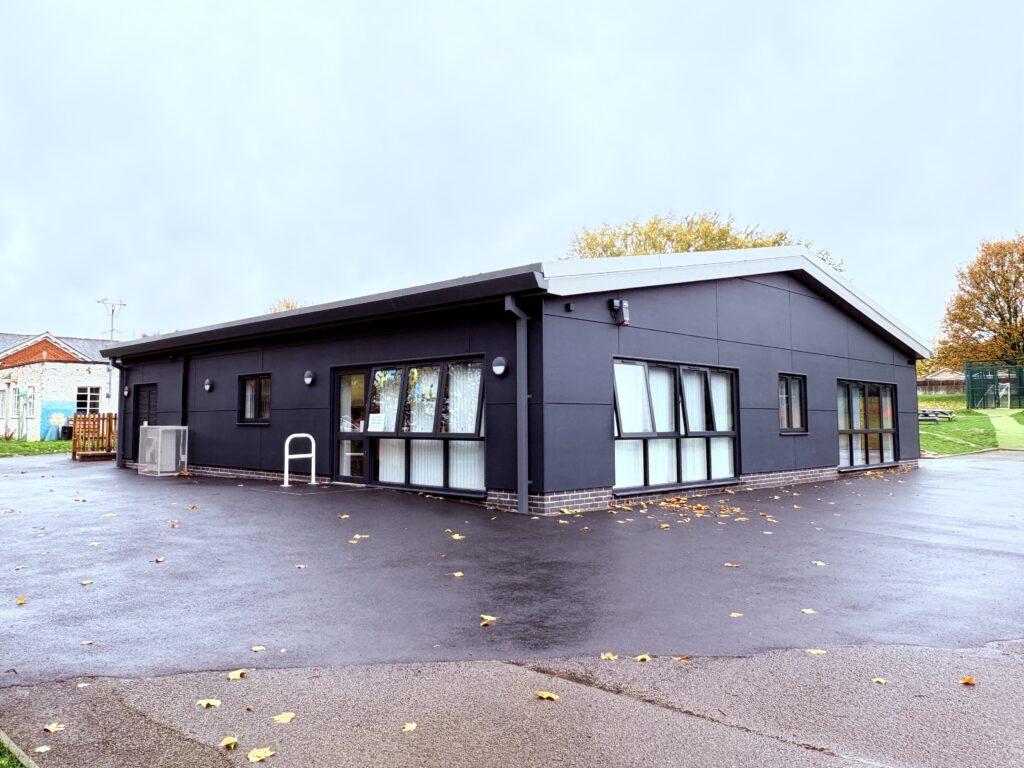
 Replacement of HORSA building at primary school
 School Decarbonisation in Reading with Air Source Heat Pump Installation
As 2025 draws to a close, now is the perfect time to review your school’s property and estate to ensure everything is in order for the year ahead. End-of-year school estate checks allow you to identify maintenance priorities, address compliance issues and plan your budget effectively for 2026.
Neglecting these essential tasks could result in costly emergency repairs, regulatory breaches or disruption to teaching and learning. Our comprehensive checklist will help you stay on top of your responsibilities and enter the new year with confidence.
Why are end-of-year school building checks important?
Taking time to conduct thorough school property checks before the calendar year ends offers several benefits. First, it allows you to identify minor issues before they escalate into major problems that require significant investment. Second, it ensures you remain compliant with statutory requirements and health and safety regulations.
Additionally, completing these checks now gives you a clear picture of your maintenance and refurbishment priorities, making it easier to allocate budget and apply for funding in 2026. It also means you can schedule any necessary work during holiday periods, minimising disruption to pupils and staff.
Your school estate maintenance checklist for end of 2025
Conduct a full building inspection
Start by arranging a comprehensive condition survey of your entire estate. This should cover roofs, walls, windows, doors, foundations and all structural elements. Look for signs of damage, such as cracks, leaks, dampness or deterioration, that may have worsened throughout the year.
A professional survey conducted by RICS-certified surveyors will provide you with a detailed report highlighting urgent repairs, compliance issues and recommended improvements.
Review health and safety compliance
Check that all fire safety systems are functioning correctly, including alarms, extinguishers, emergency lighting and evacuation routes. Ensure fire doors close properly and that exit routes are clear and accessible.
You should also review your asbestos management plan if your buildings were constructed before 2000, and verify that any asbestos-containing materials are properly managed and recorded.
Assess mechanical and electrical systems
Your heating, ventilation and electrical systems work hard throughout the year and require regular attention. Arrange for qualified engineers to inspect boilers, radiators and thermostats to ensure they are operating efficiently ahead of the colder months.
Check that all electrical systems meet current safety standards too, and that portable appliance testing (PAT) is up to date. Faulty or outdated systems not only pose safety risks but can also significantly increase your energy costs.
Inspect roofs, gutters and drainage
Water ingress is one of the most common causes of building deterioration in schools. Clear all gutters and downpipes of debris, and check for blockages in drainage systems that could lead to flooding or damp issues.
Inspect roofs for damaged or missing tiles, and examine flat roofs for signs of pooling water or deterioration. Addressing these issues now can prevent costly water damage and damp and mould problems in the new year.
Review accessibility and inclusivity
Evaluate whether your buildings meet accessibility requirements for pupils, staff and visitors with disabilities. Check that ramps, lifts, accessible toilets and signage are all in good working order and comply with current regulations.
If improvements are needed, consider how inclusive design upgrades could be incorporated into your 2026 plans.
Plan your budget and funding applications
Review your findings from the above checks and create a prioritised list of works required in 2026. Separate these into urgent repairs, routine maintenance and longer-term improvements.
Calculate the costs associated with each priority and assess whether your existing budget will cover these expenses. If additional funding is needed, begin preparing applications for schemes such as School Condition Allocation (SCA) or Urgent Capital Support (UCS).
Update your estate management plan
If you have an estate management plan, now is the ideal time to review and update it based on your end-of-year findings. This document should outline your maintenance priorities, budgets and timelines for the next three to five years.
An up-to-date estate management plan helps you stay organised and strengthens any funding applications you submit by demonstrating strategic planning and good governance.
How Eddisons Education can support your school property planning
We understand that managing school estates can be overwhelming, especially when budgets are tight and responsibilities are numerous. Our team of experts can support you with surveying, planning, funding applications and building works to ensure your estate is safe, compliant and fit for purpose in 2026.
With 180 years of experience, a proven track record and positive client reviews, you can trust us to guide you through every stage of preparing your school buildings for the year ahead.
Book your free consultation today
If you are unsure where to start with your end-of-year school estate checks or need professional support to prepare for 2026, we are here to help. Call 0808 301 9697 or complete the form below to arrange a free consultation with our team.